Hilary Roche runs the Colony Hotel on Atlantic Avenue, and in 2023 she stood in front of the Delray Beach Historic Preservation Board and said something that should stop any buyer eyeing an old Delray property: "We've been in permitting for three years to have three front awnings in our hotel replaced ….and we can't seem to do that even after sending decades of photos." Three years. Three awnings.
That single sentence tells you more about buying historic property in Delray Beach than any listing description ever will. The obvious question a buyer asks is "is this house old?" The question that actually determines what you can do with it after closing is narrower and stranger: does this specific address sit inside one of the city's five locally designated historic districts, or is it individually listed on the Local Register, or is it just an old building on a street that happens to feel historic? Those are three different legal categories, and Delray Beach has spent the last several years actively deciding, block by block, which properties fall into which one.
Which Kind of "Historic" You're Actually Buying
Delray Beach has five locally designated historic districts: Old School Square, Del-Ida Park, Nassau Park, the Marina Historic District, and West Settlers. Four of them trace back to 1987, when the city, working with the Delray Beach Historical Society and a group of volunteer citizens, established the first districts, with an additional district, West Settlers, formed in 1997. Beyond the five districts, the city also carries a separate list of individually designated historic properties, buildings old enough and significant enough to warrant protection even though they sit outside any district boundary, like the Colony Hotel itself.
Here's what most buyers miss: proximity to history is not the same as historic-district status. Atlantic Avenue, the street every visitor associates with old Delray, is not one of the five districts. In 2023 the Historic Preservation Board actually recommended changing that. The board voted to recommend an ordinance adding a historic district overlay for Atlantic Avenue, generally located between Swinton Avenue and the Intracoastal Waterway, including Veterans Park. A cultural resource study found seventy properties in the proposed area, with twenty-six non-contributing and forty-four contributing to a period of significance running from 1903 to 1968.
It didn't happen. Atlantic Avenue will not become a historic district. Instead, the Delray Beach City Commission decided in a workshop meeting that the city would craft an ordinance to establish a conservation district for Atlantic Avenue, along with Swinton Avenue and Frog Alley in the northwest neighborhood. Mayor Tom Carney and Commissioners Angela Burns and Rob Long supported the action, while Commissioners Juli Casale and Thomas Markert voted no. A conservation district is a lighter regulatory touch than a historic district. The commission chose it deliberately, after a decade of debate, specifically because merchants and property owners on the Avenue argued the full historic overlay would make it too hard to run a business there.
That decision matters to you as a buyer because it means a 1920s building fronting Atlantic Avenue plays by different rules than a nearly identical cottage two blocks away in Del-Ida Park or Nassau Park. Same era, same architectural DNA, completely different permitting reality.
| District | Roughly designated | What defines it |
|---|---|---|
| Old School Square Historic Arts District | 1987 | The city's largest historic district, featuring 176 structures, 101 of which are at least 50 years old. |
| Del-Ida Park | 1988 | Platted in 1923 as one of Delray's first planned developments, with Mediterranean Revival and Craftsman Bungalow homes; became a locally designated historic district in 1988. |
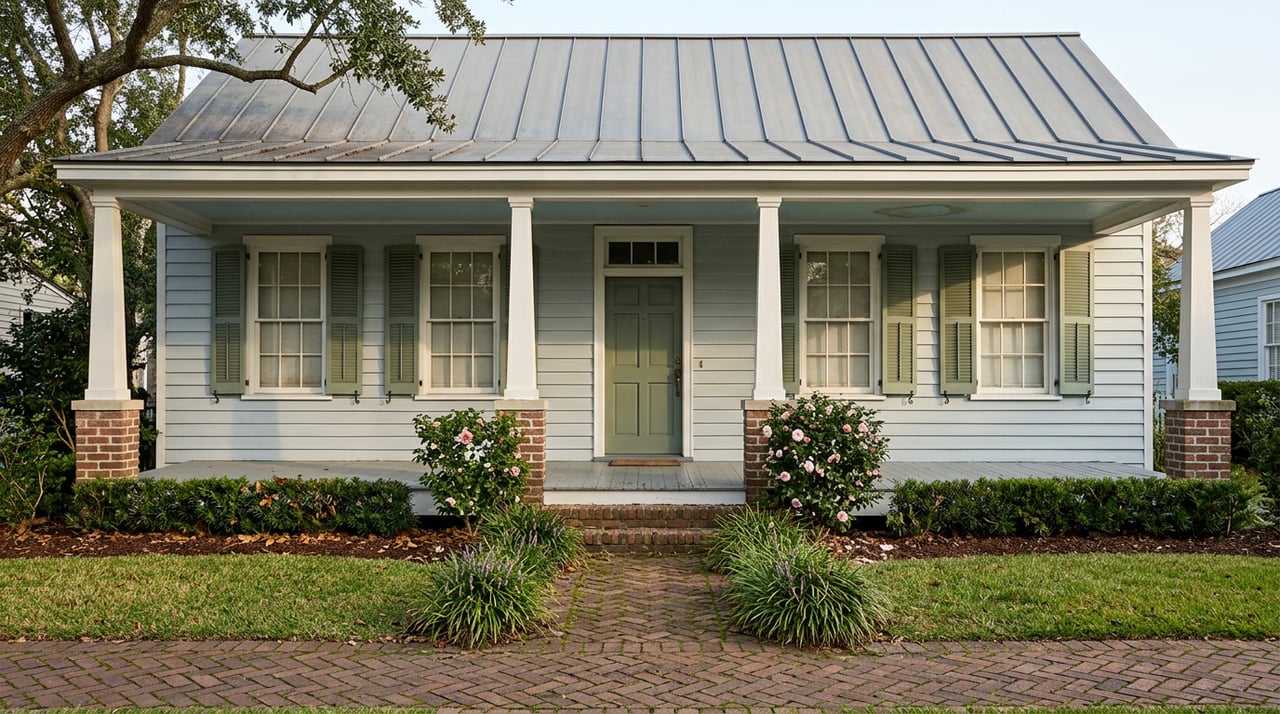
| Nassau Park | 1988 | The city's first planned residential development south of Atlantic Avenue, home to 17 one- and two-story cottages built in the Cape Cod Revival and Minimal Traditional styles, dating from 1935 to 1941. |
| Marina Historic District | 1988 | Situated on the Intracoastal Waterway and built around the town's City Marina, with styles ranging from Mediterranean and Mission Revival to Monterey, Florida Cottages, and Art Moderne, most constructed between 1922 and 1943. |
| West Settlers | 1997 | The site of the first African-American settlement in Delray Beach, established in 1894 by settlers from northern and western Florida, Georgia, and South Carolina. |
The Certificate Nobody Puts on the Listing Sheet
If your future address falls inside any of those five boundaries, or if it's one of the roughly two dozen individually listed properties scattered outside them, a document called a Certificate of Appropriateness controls what you can do to the exterior. The Historic Preservation Board requires a review process for exterior alterations or additions to a historic structure, reviewed for compliance either by the Historic Preservation Board or city staff, depending on the extent of the work. Even changing the exterior color of a structure requires an approved Certificate of Appropriateness request along with a Building Materials and Color Sample Form.
The flip side is real freedom on the inside. The city allows any general maintenance and interior alterations to be at the discretion of the property owner. You can gut a kitchen in Del-Ida Park without asking anyone's permission. You cannot change the roofline, swap a window style, or add a driveway without a review, and demolition is its own conversation entirely. Demolition of a structure within a historic district, contributing or not, requires review and approval of a Certificate of Appropriateness by the Historic Preservation Board, and demolition can't occur until a building permit has been issued for the alterations or redevelopment described in that certificate.
This isn't theoretical paperwork. Board minutes from actual Delray Beach cases show how granular the review gets. A 2021 application for a property at 123 SE 7th Avenue in the Marina Historic District came down to a debate over roof tile color, with a board member asking the applicant to confirm they'd use white cement tile instead of charcoal gray before approval was granted. A separate 2025 case involved a contributing single-family home where the owner had already replaced siding without approval and had to bring an after-the-fact Certificate of Appropriateness before the board, with the planner clarifying that even if the siding got approved, it wouldn't automatically strip the property's historic designation. If you're buying a home with recent renovations in one of these districts, that history is worth checking before you assume the work was done by the book.
How Long This Actually Takes
The Historic Preservation Board doesn't meet every week. It works through a standard cycle: staff can approve minor items administratively, but anything larger goes to a monthly board meeting, and missing a submission deadline pushes your item to the following month. A comparable South Florida preservation board process puts the realistic range at a few weeks for staff-level approvals up to one to three months for board review, and notes design and approval phases in historic districts commonly run two to three times longer than the same project outside one. Delray's board runs on a similar monthly cadence, so if you're closing on a Del-Ida Park cottage planning to swap the windows before you move in, build that lag into your timeline now rather than discovering it after the movers arrive.
"I support the Historical District, but I need you to support me and help me run my business." — Hilary Roche, owner, the Colony Hotel
That's the tension every Delray historic property buyer inherits. The board's job is protecting what makes these streets worth buying into in the first place. The cost is a slower, more deliberate path to any exterior change, no matter how small.
The Money on the Other Side of the Paperwork
The trade for that friction is a real tax benefit most buyers never hear about until they're already deep into a renovation budget. The Historic Property Ad Valorem Tax Exemption, available to owner-occupied and income-producing properties that are historically contributing to a district or individually listed, exempts 100% of the assessed value of qualified improvements from property tax for up to 10 years. The city's own example: if a property is assessed at $100,000 and $25,000 of qualifying rehabilitation improvements are made, that $25,000 isn't taxed for a period of 10 years. Board minutes show this program gets used, not just advertised. A 2021 filing on Dixie Boulevard in Del-Ida Park went before the Historic Preservation Board specifically to recommend an ad valorem tax exemption for additions and alterations to a contributing structure, and a separate exemption request came before the board again in February 2025.
For investors weighing a non-owner-occupied historic property, there's a second layer. Federal Historic Tax Credits provide up to a 20% tax credit for the rehabilitation of historic non-owner-occupied properties within a Nationally Listed Historic District or individually listed on the National Register of Historic Places. That's a meaningful number if you're evaluating a duplex or small multifamily property in one of Delray's federally listed pockets.
Before You Write the Offer
- Confirm whether the specific parcel sits inside one of the five district boundaries, is individually listed outside them, or is simply an old building with no formal status. Only the first two trigger Certificate of Appropriateness review.
- Ask whether any planned exterior work, windows, roofing, fencing, paint color, a new driveway, would need staff-level sign-off or a full board hearing, since that changes your renovation timeline by months.
- Pull the property's permit and Certificate of Appropriateness history before closing. If prior owners did exterior work without approval, that becomes your problem to resolve, not theirs.
- If you're buying to rehab and rent, ask your accountant whether the property qualifies for the local ad valorem exemption, the federal 20% credit, or both, since the answer changes your renovation math.
- If your target sits near Atlantic Avenue rather than inside Del-Ida Park, Nassau Park, the Marina district, Old School Square, or West Settlers, don't assume historic-district rules apply. They likely don't, at least not yet.
Frequently Asked Questions
Does buying a historic property mean I can never repaint it? No, but you can't pick the color freely. Approval of a Certificate of Appropriateness request along with a Building Materials and Color Sample Form is required to change the exterior color of a structure. Interior paint is entirely up to you.
What counts as "historic" if the home isn't in one of the five districts? A property is considered historic by the City of Delray Beach if it is at least fifty years old and holds significance for its historical associations with a person, event, or trend, or for distinguished architectural merit. That threshold can qualify an individual property for the Local Register even outside a district.
Who actually decides these designations? Nominations for an individual property can be initiated by the property owner, the Historic Preservation Board, or the City Commission, and nomination of a historic district can be initiated by the Historic Preservation Board or the City Commission, then reviewed by the board and finally the City Commission. In other words, the map can still change. Ask your agent whether any nearby streets have open discussions before you assume today's zoning is permanent.
Buying in one of Delray Beach's historic districts is not a reason to walk away from a property you love. It's a reason to know exactly which rules apply to your specific address before you fall in love with a renovation plan the board might not approve for months. If you're weighing a cottage in Nassau Park against a comparable home a few blocks outside district lines, 1 Ocean Realty can help you read the actual boundary map, check a property's Certificate of Appropriateness history, and price in the timeline before you write the offer. Contact Tatsiana for a personalized market consultation.