Are you ready to trade weekend maintenance for ocean breezes and walkable days, but worry a condo means giving up the life you love? You are not alone. Many Boca Raton homeowners want less space but the same access to beaches, culture, and easy entertaining. In this guide, you will learn how to choose the right building, balance amenities and fees, plan storage, understand new Florida condo rules, and map a smooth timeline. Let’s dive in.
Why a Boca condo can be an upgrade
Boca Raton gives you the lifestyle most downsizers want: beaches, waterfront parks, outdoor events, and a vibrant cultural scene within a short drive or walk. The city’s calendar and programming make daily life feel full without a big house to manage. You can browse city updates and events to see just how active it is year-round on the City of Boca Raton’s news and events page at myboca.us.
You will also find a wide range of condo options, from high-rise oceanfront towers to low-rise inland buildings. Recent market reporting shows the luxury tier remains active, even as the broader market normalizes. For context on the mid-2025 backdrop, review the Boca Raton Q2 2025 highlights from Douglas Elliman.
Know your condo choices
Oceanfront towers
These buildings deliver resort-style living with large fitness centers, beach access, concierge, and valet. They often come with higher monthly fees and firm building rules, which can be a plus if you value structure and services. If you want views, security, and staff support, this category is worth a look.
Low-rise and 55+ communities
Older garden-style condos and select 55+ buildings tend to offer social programming and a lower entry price. Many are well-loved and owner-occupied, though older construction can mean near-term repairs and evolving reserves. Review inspection and reserve documents closely so your monthly costs stay predictable.
Inland townhome condos
Townhome-style condominiums and gated inland communities can give you more space and a familiar neighborhood feel. You may drive a bit farther to the beach or downtown, but dues may be lower and governance simpler. This option can be a smart middle ground if you want room to host without paying for high-rise services.
Amenities vs fees: pick your balance
You want convenience without paying for amenities you never use. Ask yourself:
- Pool, fitness, and club rooms: Will you use them weekly, or would you rather keep fees lower and join a nearby gym? Check whether amenities are managed by staff or a third party, since that can affect costs.
- Valet, concierge, and on-site security: If package handling, guest check-ins, and grocery drop-offs matter, these services may be worth more than extra square footage.
- Social programming: Look for resident-led clubs and classes if you want an easy way to connect. Ask who runs events and how active the calendar is.
A building’s budget and reserve plan will show whether its amenities are sustainable. A lower fee with thin reserves can signal future assessments.
Safety, inspections, and reserves
Florida’s post-Surfside reforms expanded milestone inspections, added structural integrity reserve studies, and increased transparency for multi-story and older buildings. These rules can lead to repairs, higher reserves, and, in some cases, special assessments. Get familiar with the context using this overview of Florida’s condo reforms from FlaglerLive.
When you find a candidate building, request the latest inspection reports, reserve studies, and any notices of planned assessments. Ask how the association has addressed required work so far, and how upcoming projects are funded. Treat reserve health and inspection results as a core part of your decision, not a footnote.
Insurance, flood, and wind planning
Condo insurance has two parts. The association carries a master policy for the building. You carry an HO-6 policy for your unit’s interior finishes and personal property. The split between “bare-walls in” and “all-in” coverage matters for replacement costs and loss assessments. Review the association’s obligations and record-access rules under Florida Statute 718.111 from the Florida Legislature, then use the state’s consumer guide to understand the master policy versus HO-6 details in the Homeowners Insurance Toolkit.
Boca Raton is coastal, so flood and wind exposure are part of planning even for some inland addresses. Standard homeowners policies exclude flood, and lenders often require flood coverage in certain zones. Always check the exact address on the FEMA Flood Map Service Center and get quotes early to avoid surprises.
Plan your downsizing timeline
Start 3 to 6 months before you plan to move so you can declutter thoughtfully and avoid rushed decisions. Begin with sentimental items and large furniture, then sell, gift, donate, or store based on what you truly use. A measured plan reduces stress and helps you keep what matters most. For step-by-step guidance, see AARP’s downsizing tips for older adults at AARP.org.
Space that still feels like you
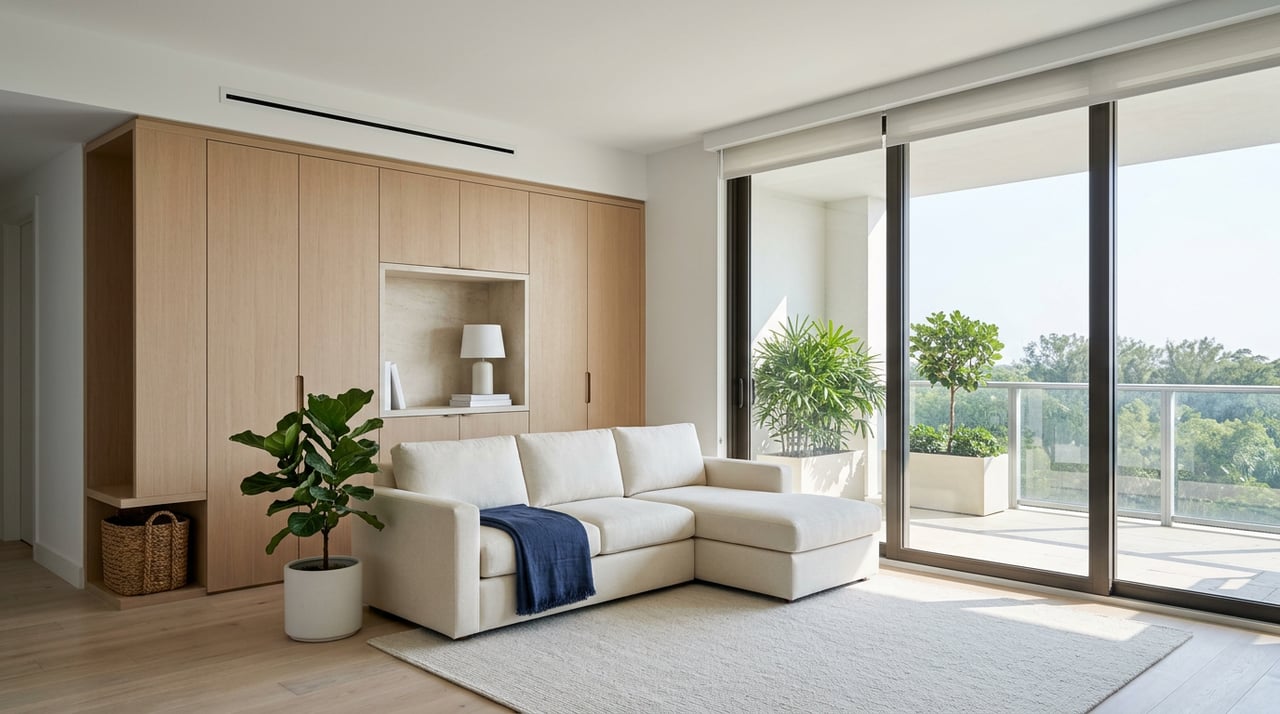
Right-sizing does not mean giving up the objects and routines you love. Use multipurpose pieces like storage beds, lift-top coffee tables, and ottomans with compartments. Add vertical storage, from floor-to-ceiling shelving to built-in bench seating with drawers. For practical, tested small-space solutions, browse these ideas from Apartment Therapy.
If you need it, consider climate-controlled off-site storage for seasonal gear or heirlooms you cannot part with. Keep it small and intentional so you are not driving back and forth every week.
Kitchen and entertaining that work
You can still host family dinners and happy hours in a condo. Focus on a well-planned kitchen layout with quality appliances and efficient workflow. A smart galley or U-shaped kitchen can serve a crowd if you add flexible seating, extendable tables, and a rolling island you can tuck away.
Also check whether the building offers a reservable club room or outdoor grill area. Many residents use these spaces for larger gatherings, which can be a great way to entertain without cramming every guest into your living room.
Aging-in-place comfort
Small, low-profile upgrades can make condo life easier for the long run. Consider non-slip flooring, lever handles, brighter layered lighting, and grab bars. If you are renovating a bath, a zero-threshold shower adds comfort and safety. For more home-fit ideas, review AARP’s resources for accessible housing at AARP’s HomeFit Model Ordinance.
Costs, taxes, and moving buffer
Monthly fees vary by building type and amenity level. Oceanfront towers with full services typically cost more each month than small inland buildings, and reserves should be evaluated with fees. The Q2 2025 Boca market highlights from Douglas Elliman are a helpful backdrop, but use the specific building budget for accurate numbers.
Insurance and flood coverage can be a meaningful line item in Florida, so get quotes as part of your early underwriting. At the county level, taxable property values have risen in recent years, which can affect expectations for assessed values. For authoritative context, see the Palm Beach County Property Appraiser’s 2025 Final Tax Roll at pbcpao.gov.
For condo moves, plan for building elevator reservations, damage deposits, mover scheduling fees, and any short-term storage. Setting aside a 1 to 3 percent buffer from sale proceeds for moving and initial updates is a practical rule of thumb.
Building selection checklist
Use this quick checklist to compare buildings and surface any surprises early.
Documents to request
- Current budget and monthly fee schedule, including the reserve line.
- The latest reserve study, any structural integrity reserve study, and the most recent milestone inspection report. Look for planned projects and timelines.
- Association master insurance policy and certificate of insurance. Confirm whether coverage is bare-walls or all-in, and review deductibles. For owner coverage, review the Homeowners Insurance Toolkit.
- Board meeting minutes for the last 12 months. Watch for deferred maintenance, litigation, or recurring contractor disputes. Florida law also addresses association records and transparency; see Florida Statute 718.111.
- Owner-occupancy and rental rules, including move-in and contractor hours, pet policies, and any recent special assessments.
Questions to ask
- When were major systems last serviced or replaced, such as roof, elevators, balconies, and risers? What is next on the plan?
- Is the unit in a mapped flood zone, and does the association carry flood coverage? Verify the address on the FEMA Flood Map Service Center.
- What resident programs or events are active, and who runs them? This helps you gauge social fit.
- Are there any open litigation items or pending large insurance claims?
- What are the move-in logistics and costs, including elevator reservations and mover insurance requirements?
Red flags
- No current reserve study or chronically underfunded reserves.
- Recent insurer non-renewal or a large master-policy deductible that could lead to owner loss assessments.
- Poor record access or refusal to share official documents that should be available under Florida law.
How we can help
You deserve a right-sized move that keeps your routine, views, and social life intact. As a boutique coastal specialist serving Boca Raton, Delray Beach, West Palm Beach, and Singer Island, we help you compare buildings, read budgets and reserves, request the right documents, and align amenities with your lifestyle. We also support seasonal rental needs and relocation timing if you want a flexible, step-down transition.
If you are ready to explore options or want a second set of eyes on a building’s fees, reserves, and insurance, connect with Tatsiana Tobina-Fotiou LLC for a personalized market consultation.
FAQs
What makes Boca Raton condo living a lifestyle upgrade for downsizers?
- You gain easy access to beaches, culture, dining, and events with less home maintenance, plus many buildings offer amenities like fitness centers, social rooms, and security.
How do Florida condo inspections and reserves affect my monthly costs?
- Milestone inspections and required reserves can lead to repairs or higher fees; reviewing reports, reserve studies, and budgets early helps you avoid surprise assessments.
What condo insurance do I need in Boca Raton?
- The association carries a master policy and you carry an HO-6 for interiors and personal property; ask for the master policy and compare it to your HO-6 quote to find gaps.
How much time should I allow to downsize from a house to a condo?
- Plan 3 to 6 months for decluttering, measurements, storage decisions, and move logistics; allow extra time if you plan renovations or accessibility updates.
Can I still host family gatherings in a Boca condo?
- Yes. Choose a unit with an efficient kitchen and flexible furniture, and consider buildings with reservable club rooms or outdoor areas for larger events.