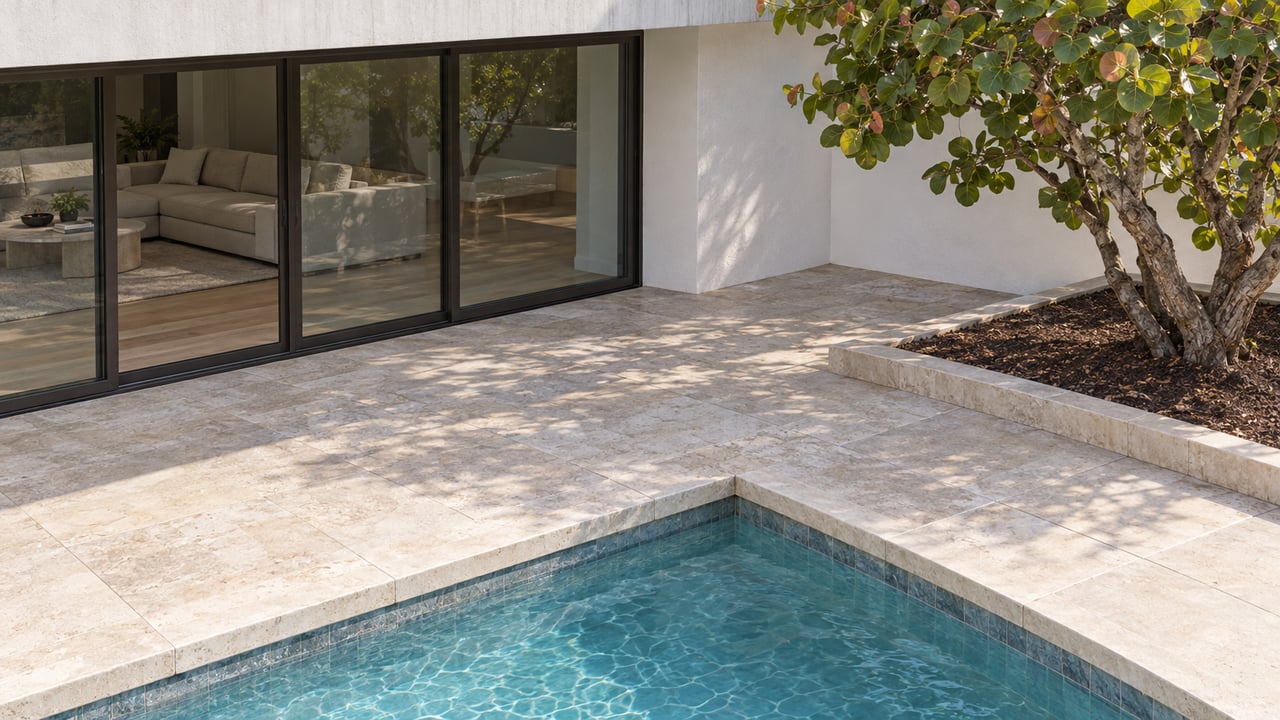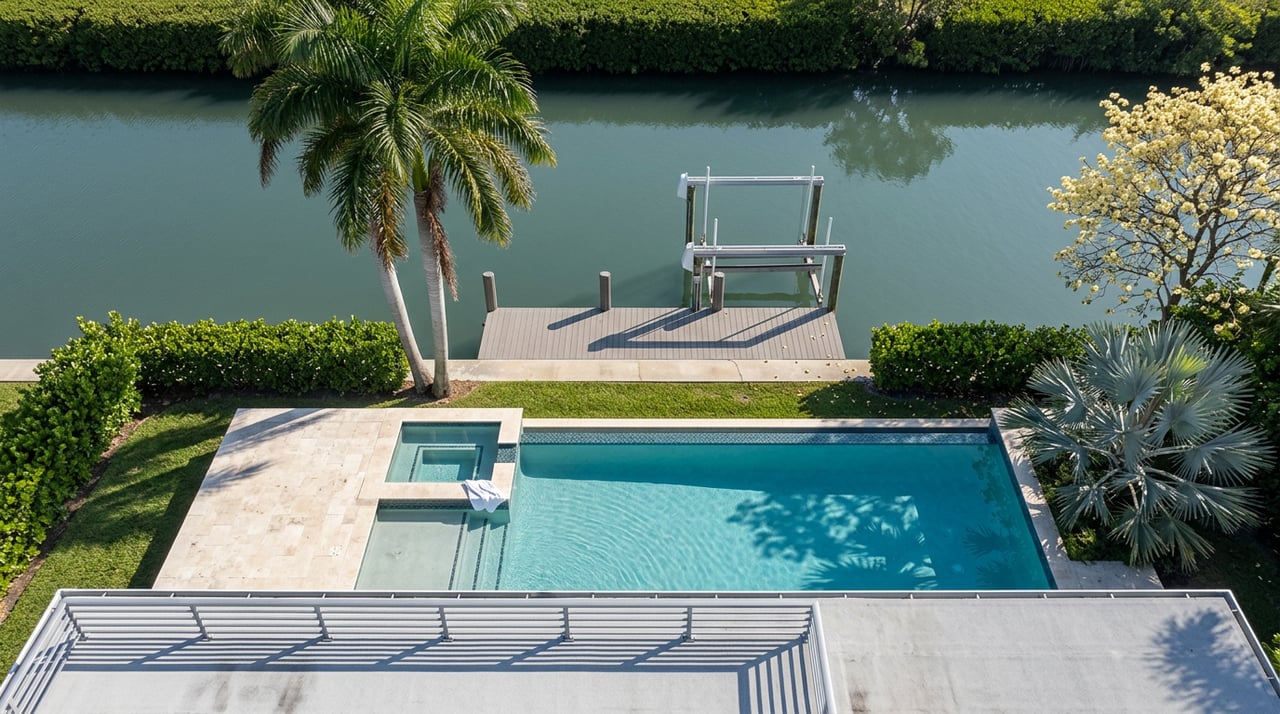
A buyer touring Coral Ridge this summer could look at two homes on the same street, both a few blocks from the Intracoastal, one a dry-lot listing and the other a canal-front listing, and walk away thinking the price gap between them is a mystery. It isn't. A 2,800 square foot home on a dry lot in Coral Ridge sells for somewhere around $900,000. A comparable home a few doors down, sitting on a 90-foot canal with a permitted dock and boat lift, trades for $1.4 million to $1.7 million. That's a premium of $500,000 to $800,000, or roughly 55 to 90 percent, for two otherwise comparable homes.
The obvious explanation is water. The real explanation is a bridge you may never see from the listing photos.
"Waterfront" Is Doing More Work Than It Should
Fort Lauderdale earned its "Venice of America" nickname honestly. The city has more than 165 miles of navigable canals, and a large share of its housing stock touches water in some form. But "waterfront" on an MLS sheet tells you almost nothing about what that water actually gets you. A dock on a landlocked finger canal and a dock with unrestricted passage to Port Everglades are both technically waterfront. They are not the same asset, and the market prices them very differently once a buyer figures out the difference.
The variable that does the real work is bridge clearance. Fort Lauderdale's canal bridges range from about 8 to 25 feet of vertical clearance at mean high water, and most fixed bridges in the city sit around 14 to 17 feet. A fixed bridge does not open. If your boat, or the next owner's boat, is taller than the clearance allows, that vessel is not getting through, full stop. A movable bascule bridge is more forgiving, but it comes with its own friction: posted opening schedules, VHF radio contact, and sometimes a wait during peak traffic.
The most consequential chokepoint in the city belongs to the FEC railroad bridge near the Broward Center for the Performing Arts, used by Brightline and freight rail. Closed, it offers only 4 to 5 feet of clearance, and because the railway controls the openings rather than the city, timing is unpredictable. Compare that to the SE 17th Street Causeway Bridge, a bascule bridge with 21 feet of clearance closed, which opens frequently and handles large vessels heading to Port Everglades without much drama. Two bridges, two very different promises to a boat owner.
What "No Fixed Bridges" Actually Buys You
Listings sometimes advertise "no fixed bridges," and that phrase is doing a lot of the pricing work behind the Coral Ridge example above. It means a boat can travel from a private dock to the Intracoastal or the Atlantic without ever being stopped by a low, permanent structure. Most of Las Olas Isles, most of Rio Vista Isles, and Harbor Beach fall into this category, tying directly into the New River and the Intracoastal Waterway with a relatively short run to Port Everglades Inlet.
Neighborhoods further from that direct route, like The Landings or Coral Ridge Isles west of the Intracoastal, still qualify as waterfront but come with tradeoffs: narrower canals, at least one fixed bridge somewhere on the route out, and longer idle-speed transits. For owners of smaller powerboats, that tradeoff can be a smart value play. For anyone shopping with a sailboat's mast height or a sportfisher's tower in mind, it can be a dealbreaker they don't discover until after they've written an offer.
Here's the part that catches people off guard: even within a single prestigious neighborhood, one canal can be unrestricted while the next one over has a limiting bridge or a shallow spot. "No fixed bridges" is a route-specific fact, not a neighborhood-wide guarantee. The only way to know for certain is to ask for the bridge list on the exact path from that dock to open water, and to check clearances against mean high water, not an average tide.
| Access type | What it means | Example areas |
|---|---|---|
| No fixed bridges to open water | Any vessel height can transit; only movable bridges (if any) apply | Most of Las Olas Isles, Rio Vista Isles, Harbor Beach |
| Fixed bridge somewhere on route | Permanent clearance ceiling, typically 8-25 ft at mean high water | The Landings, Coral Ridge Isles, some finger canals |
| Canal-front, no ocean access | Peaceful water access with no route to the Intracoastal or Atlantic | Certain interior canal lots citywide |
Two More Costs Hiding Behind the Word
Bridge clearance is the biggest lever, but it isn't the only one. Two more details tend to surface only after a buyer is already deep into due diligence, and both are worth pricing in before an offer, not after.
Vessel restrictions written into the deed. Some waterfront communities cap boat length or type through their covenants. Restrictions vary by community. If you're buying with a specific boat in mind, or with the plan to eventually upgrade, the CC&Rs matter as much as the dock itself. This is a documents question, not a walkthrough question, and it belongs in a purchase contingency.
Waterfront-specific HOA fees stacked on top of the regular dues. Communities that maintain shared docks, seawalls, or common waterfront areas often charge for it separately. Isla Bahia, Rio Vista Isles, and Las Olas Seven Isles all levy waterfront fees in addition to standard HOA dues, typically running $200 to $800 a month extra. That's a real number to run against your monthly budget before you compare two "similar" waterfront HOAs and assume the lower total is the better deal.
The Seawall Question Sitting Underneath All of It
There's a longer-horizon factor that touches every waterfront property in the city regardless of bridge access: seawall elevation. Fort Lauderdale has seawall elevation requirements as part of its resilience planning for sea-level rise and king tide flooding, and a seawall that looks fine today may still fall short.
For a buyer weighing two no-fixed-bridge properties on paper-equal canals, seawall elevation is a legitimate tiebreaker. Replacement or elevation work commonly runs into the low thousands of dollars per linear foot once engineering and permitting are factored in. Ask for the current elevation and the age of the wall before you fall for the dock.
Before You Write the Offer
- Get the exact bridge list, not a neighborhood reputation, for the route from the specific dock to open water, and check every clearance figure against mean high water.
- Read the CC&Rs or deed restrictions for vessel length and type limits before you assume your boat, or your future boat, fits.
- Ask whether the HOA charges a separate waterfront fee on top of standard dues, and get the current monthly figure in writing.
- Request the seawall's current elevation and last inspection date, and ask how it compares with city requirements.
- Have a marine surveyor or local captain run the actual route at the tide you'd realistically use, not just check a chart.
A Few Direct Questions
Does "ocean access" always mean no fixed bridges? No. A property can have technical ocean access while still requiring passage under one or more fixed bridges with limited clearance. Ask for the specific bridge heights along the route rather than relying on the phrase alone.
Are movable bridges a safe substitute for no-fixed-bridge access? Not automatically. Bascule bridges have posted opening schedules and some restrict openings during rush hour. Worth knowing the schedule, not just whether the bridge opens at all.
Is a citywide median price useful for pricing a waterfront home? Treat it as a starting point only. Waterfront pricing in this city moves on access, canal position, seawall condition, and enclave-specific rules in ways a broad average can't capture. The most defensible number usually comes from the narrowest relevant comparable, the same canal or the same access tier, not the city as a whole.
Bridge clearance, deed restrictions, waterfront HOA fees, and seawall elevation won't show up as a single line on a listing sheet. They show up in documents, in city and HOA records, and in a conversation with someone who works this waterfront every week. If you're comparing "waterfront" options in Fort Lauderdale and want to know what the label is actually hiding on a specific property, 1 Ocean Realty can walk the bridge list, the covenants, and the seawall history with you before you write the offer, not after.
This article is general information, not legal, tax or financial advice. Consult a qualified professional about your situation.