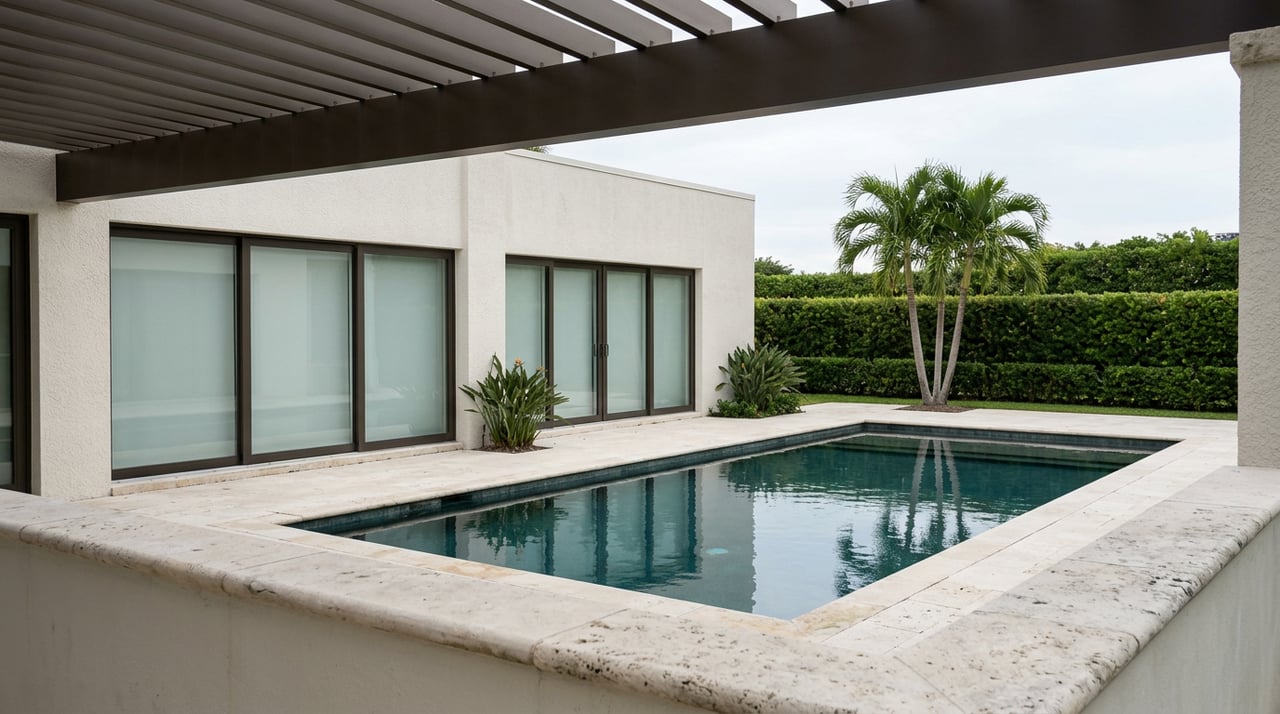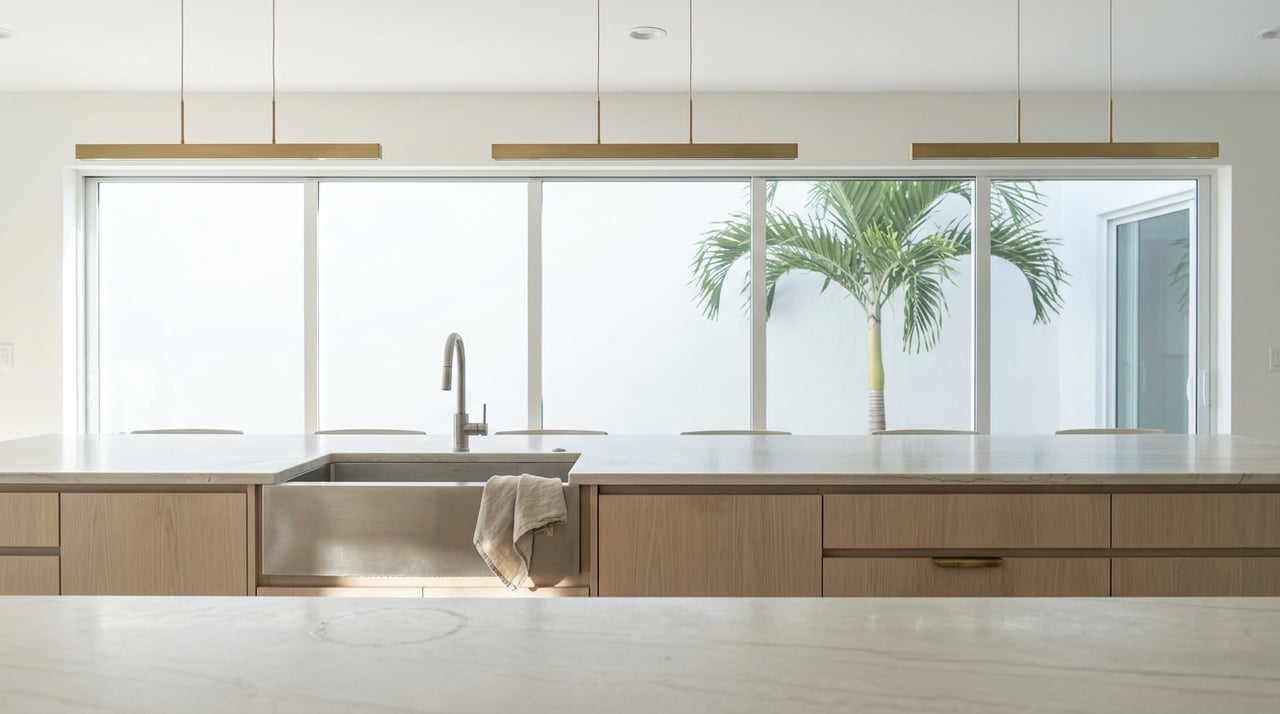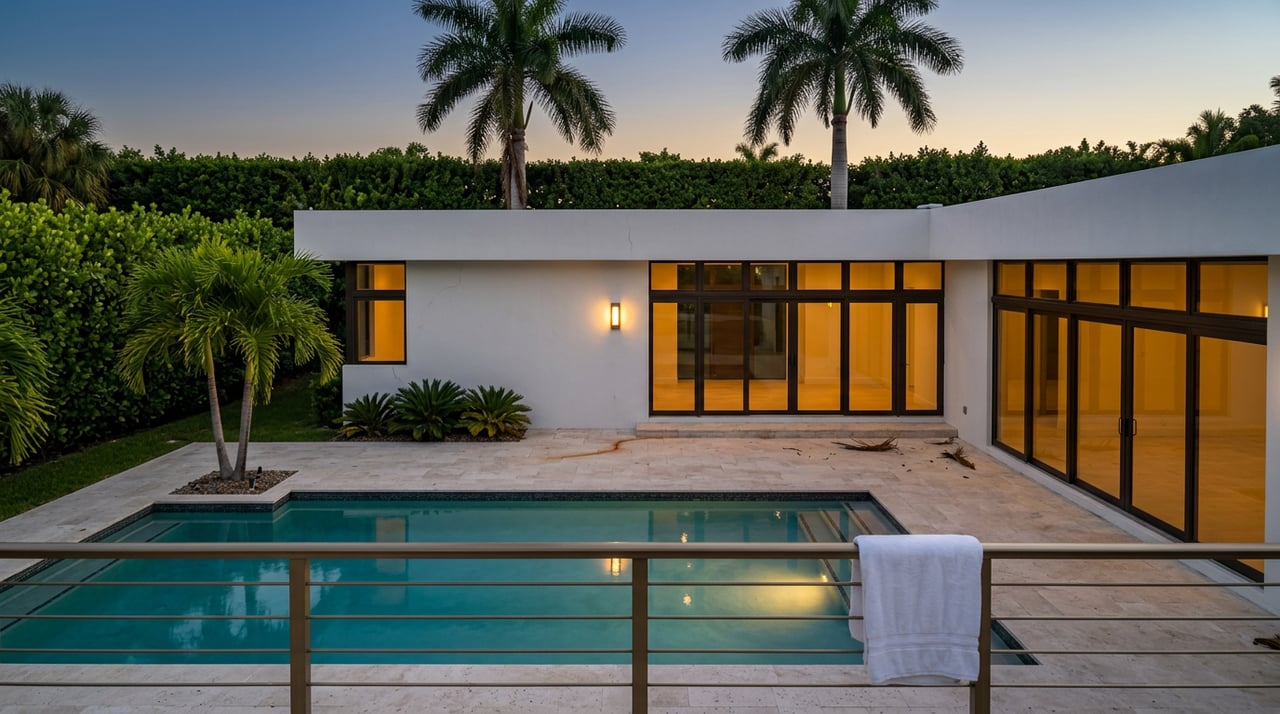
Scroll through active Singer Island condo listings this month and you'll notice something that wasn't showing up in remarks a few years ago. A unit at Seawinds, built in 1984, is marketed with the detail that the complex has already completed all its Structural Integrity Reserve Study requirements. A listing at the Ritz-Carlton Residences goes further, telling buyers directly that the building has solid reserves with all inspections and remediation work done. Neither of these lines is about square footage or the sunrise view from the balcony. They're about paperwork, and agents are putting that paperwork front and center because buyers have started asking for it before they ask about anything else.
That shift is the story. For years, the assumption on a barrier island full of 1970s and 1980s towers was that building age set the risk level: older meant riskier, newer meant safer, and price followed accordingly. That assumption no longer holds on Singer Island, because almost every building on the island, regardless of when it went up, is now operating under the same state inspection clock. What actually separates a safe purchase from an expensive surprise isn't the year on the certificate of occupancy. It's whether that building's association has done the required work and can produce the documents to prove it.
Why the 25-year clock catches nearly everyone here
Florida's milestone inspection law, created after the Surfside collapse and codified in Florida Statute 553.899, sets two different age triggers depending on how close a building sits to the coast. Palm Beach County's Building Division spells out the local version plainly:
| Distance from coastline | First inspection required at | Recurring inspection |
|---|---|---|
| Within 3 miles of the coastline | 25 years of age | Every 10 years after |
| More than 3 miles from the coastline | 30 years of age | Every 10 years after |
Every residential tower on Singer Island sits inside that 3-mile band, because the island is the coastline. That means a building from 1978 and a building from 1998 are both already inside the 25-year window, and a building completed as recently as 2001 will hit its first mandated inspection this decade. Age still matters for figuring out when a building's clock started, but it stopped being a proxy for how much risk you're taking on, because the newer buildings are catching up to the older ones fast.
The transition deadlines already came and went for most of the island's older stock. Any building that had already passed 25 years of age before July 1, 2022 was required to complete its first inspection by December 31, 2024. Buildings that crossed that threshold between mid-2022 and the end of 2024 had until December 31, 2025. If you're touring a pre-1997 Singer Island building this month and the listing agent can't produce a completed inspection report, that isn't a scheduling gap. The deadline has passed.
Two documents, two different questions
Buyers often treat "the inspection" as one thing. It's actually two separate reports that answer two separate questions, and conflating them is where a lot of buyers get surprised at the closing table.
- The Milestone Inspection answers a structural question: is the building sound today, and does it show substantial deterioration. A licensed engineer or architect performs a visual Phase 1 review, and only escalates to a more invasive Phase 2 if that first look turns up cause for concern.
- The Structural Integrity Reserve Study (SIRS) answers a financial question: are the association's reserves actually funded on a schedule that covers the work the building needs, or is that gap going to land on owners as a special assessment.
A clean Milestone Inspection paired with a fully funded SIRS is the profile you want. A Phase 2 finding isn't automatically a reason to walk away if the reserves already cover the identified work. The profile that should slow you down is weak reserves sitting next to a Phase 2 report with defined remediation costs still unaddressed, because that's the combination that turns into a five-figure or six-figure bill for every owner in the building.
What changed for buyers on January 1, 2026
Florida added real teeth to the buyer side of this process at the start of this year. As of January 1, 2026, condo associations statewide are required to make milestone inspection summaries and SIRS documents public, and the rescission period for a buyer walking away from a condo contract extended from three days to seven. Jeff Lichtenstein, a longtime Palm Beach County broker interviewed by CBS12 about the change, put the shift plainly: "condos now are a much more sure type of a thing." The extra four days matter more than they sound, because reading a full SIRS report, cross-checking reserve balances against the inspection findings, and asking a follow-up question or two doesn't happen inside a three-day window when you're also coordinating a lender and an inspector.
The same law also closed a loophole that had kept monthly dues artificially low for years. Associations can no longer vote to waive reserve funding for the eight structural components the state considers non-negotiable: roof, load-bearing walls and primary structural members, fire protection, plumbing, electrical, waterproofing, windows and exterior doors, and any other item with a deferred maintenance cost over $10,000. Full funding under that schedule had to begin by January 1, 2026. That means any Singer Island association covered by this rule should already be roughly seven months into its first year of mandatory reserve contributions. If a building's most recent financials don't reflect that, it's worth asking the board directly why not, since one allowed exception exists: an association can suspend reserve funding for up to two years after a milestone inspection specifically to redirect cash toward urgent repairs the inspection identified. That's a legitimate reason for a dip. A dip with no inspection behind it is not.
The financing risk hiding behind a missed deadline
Noncompliance doesn't just create a safety question. It creates a financing one. Fannie Mae maintains a list of condo projects ineligible for conventional financing, and that list has grown from a few hundred buildings nationally before 2021 to roughly 5,000 as of May 2026, with 696 of those buildings located across Miami-Dade, Broward, and Palm Beach counties combined. If a Singer Island building you're considering hasn't filed its paperwork, you may find out during underwriting that your buyer's financing options just narrowed to cash or non-conventional lending, well after you've written the offer.
What this means for the island's price spread
Prices for Singer Island real estate this summer range from around $250,000 up toward nearly $8 million, with a median listing price near $899,000. Condo-specific numbers from a Q2 2026 market report on the broader Riviera Beach area show updated Singer Island units starting around $400,000 and running past $5 million for oceanfront residences, with median condo prices climbing roughly 7.8 percent year over year and inventory sitting at about 4.2 months of supply. Condos on the island also move faster than single-family listings, typically marketing in 45 to 75 days compared to 90 to 120 days for houses. Some of that spread is obviously about size, floor, and whether a building fronts the ocean or the Intracoastal. But part of it is also the compliance gap this law created. A dated but structurally sound building with a completed SIRS and reserves on schedule, like the Seawinds example, can command a real premium over a similarly aged building that hasn't started the process, even with comparable finishes and the same view.
Before you write an offer
Ask for these documents and answers before your inspection contingency expires, not after:
- The most recent Milestone Inspection report, including the inspector's summary and full findings.
- The current SIRS, with reserve balances broken out by the eight mandatory structural components.
- Confirmation of whether any Phase 2 investigation was triggered, and if so, what work it recommended and when repairs began.
- The association's most recent budget, showing whether full reserve funding started as scheduled on January 1, 2026.
- Written confirmation of any special assessments already levied or under board discussion.
- Whether the building appears on Fannie Mae's ineligible project list, which your lender can check directly.
If a listing agent or seller hesitates to hand any of this over, that hesitation is itself information. Under the new transparency rules, these documents are supposed to be public. A building with nothing to hide usually doesn't make you ask twice.
Frequently asked questions
Does a Phase 2 finding mean I should walk away from the deal? Not automatically. A Phase 2 report identifies a defined scope of remediation work. If the SIRS shows reserves that already cover that scope, the building is in a manageable position. The concern is a Phase 2 finding sitting next to reserves that fall short, since that gap typically becomes a special assessment.
What if the seller or association won't provide the SIRS? As of January 1, 2026, associations are required to make these documents public, so a refusal is worth flagging to your agent and attorney immediately. It may simply be a slow-moving management company, but it's also the kind of delay that's worth resolving before your document review window runs out.
Does the seven-day rescission period apply to every Singer Island condo resale? It applies broadly to condo purchase contracts under Florida law, but the details of how and when it runs can vary by transaction. Confirm the specific terms with your closing attorney rather than assuming a blanket rule covers your contract.
Buying on a barrier island means buying into a building's history as much as its view. If you're evaluating a Singer Island condo and want a second set of eyes on the inspection and reserve documents before you write an offer, 1 Ocean Realty works this market building by building. Contact Tatsiana for a personalized market consultation before your contingency clock starts running.